
Solving Farm Drainage Challenges with Soil and Water Conservation Practices
As a steward of the land, a major priority for our farm that I pride myself on is conservation.
Not every acre of a field is used to grow crops or raise livestock. Sometimes specific areas are dedicated solely to conservation efforts. In this field, my conservation goals focused around the topography of the land.
Water Drainage Challenges on the Farm
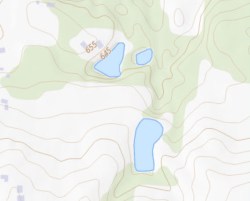
This ground had some serious drainage issues. About half of the field is low and relatively flat. Yet, the other half sits up on a hill with lots of peaks and valleys in between.
Before construction, whenever it would rain, the excess water would travel through the elevated ground at an alarming rate. Funneling into the valleys and racing downhill, the surface water started to erode the soil.
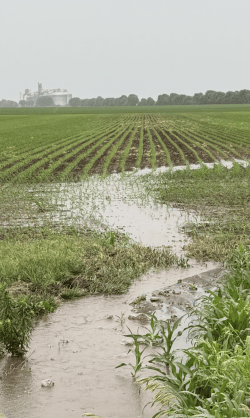
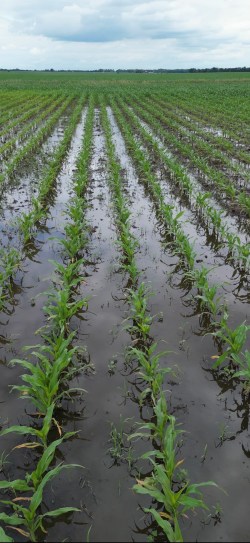
This also allowed the opportunity for key nutrients that I applied in the form of fertilizer for the crops to be displaced, essentially washing them downstream. When the water rushed its way into the lower part of the field, it was too flat to handle that much water at once. With the water having nowhere to go, it caused the soil in that area to be overly saturated and started to drown out the crops in the field. Imagine a garden hose being left on in one spot for too long.
Innovative Water & Soil Conservation Practices for Farms
As a tenant farmer on this field, I do not own the land. This is quite common for farmers to rent farm ground from their neighbors. However, both the landowner and myself share a common goal in caring for the upkeep of the land as we both make our living from the soil. Working with the landowner and a team of professional conservation engineers, we came up with a prescribed solution.
This field needed three things: a rock berm, grass waterways, and drain tile.

Using Rock Berms to Slow Water Flow & Prevent Soil Erosion
The rock berm is simply a bunch of rip-rap boulders that interlock together. We placed them in the field uphill where the water was traveling downstream at the fastest pace. This causes the water to slow down at the very start as it’s forced to zig-zag through the rocky maze. Because the water will meander back and forth, it will no longer have the force it needed to carry any soil along its way.


How Grass Waterways Improve Water Efficiency and Reduce Nutrient Loss
Similar to the rock berm, the grass waterways are carefully constructed as well.

They are designed to catch the surface water in the valleys of the field. The water all across the field naturally finds its way into the low spots. The grass waterways are graded and sloped according to our blueprint designs to catch the excess water and move it throughout the field in a slow and meticulous manner. The grass acts as a hindrance, just like the rock berm, and slows the water down, with most of it staying in the waterway itself where it will be used to grow the grass.
The grass also acts as a buffer to catch any stray nutrients that might have traveled with the water. The animals and insects in the area can then use the grass as habitat and food. The rest of the water is evenly dispersed throughout the field at a rate that allows the soil to absorb all of the water, which then becomes available for the crops to use.
How Drain Tile Supports Farm Water Management & Soil Health
The drain tile acts as a third line of defense.

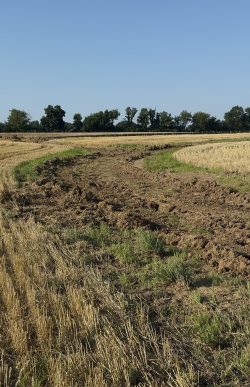
It is a perforated plastic tube that is trenched below the soil and allows any excess subsurface water to move through the soil below the water table. Over time, as the water filters through the soil, traveling furtherand further below ground, the drain tile allows the unused water to exit the field. This prevents the crops and the soil from becoming overly saturated.
Another added benefit is that it allows me to complete any necessary fieldwork with my equipment without the fear of getting stuck or damaging the soil by compacting or squishing it. This tile is usually connected to other drain tile in nearby fields, all sharing a common exit ramp designed to handle the overflow. These are often drainage ditches, ponds, or lakes.
How Soil & Water Conservation Improve Crop Yields, Farm Sustainability and Water Quality
This water and soil conservation project will allow the soil to stay healthy for decades to come, benefiting both the landowner and myself.

By improving how water moves through the field, these conservation practices foster lasting benefits for the farm and surrounding community:
- Allows me to farm this ground to its full potential to help feed and fuel the world.
- Helps prevent any silt from building up in our local drinking water reservoir, protecting water quality.
- Keeps valuable nutrients applied in the field where crops can use them, rather than allowing them to move into local waterways where they must be removed through water treatment.
- Reduces the cost of treating drinking water, easing the burden on our neighbors in the community.
A conservation project that improves soil health, supports productive farmland, and protects local water resources is one I’m proud to spearhead and will continue to replicate across more of our acres in the future.







0 Comments