
The Ultimate Summer Meat Grilling Guide from Illinois Farmers
Summer is the perfect time to fire up the grill with tasty meat. And we’re challenging you to take your grilling game to the next level when it comes to pork and beef. From cooking times and temperatures, to marinades and techniques, each cut of meat deserves its own chance to shine. Follow our meat grilling tips to turn up the heat on your summer grill meals.
Pork Grilling Guide
Pork is one of our favorite meats to enjoy on the grill. Follow these tips to up your pork grilling game.
Grilled Pork Chop Cuts 101
It’s hard to go wrong with pork, which is packed with protein and several key nutrients. There are lots of cuts to choose from, but pork chops are one of our favorites to enjoy grilled. Check out the video below for information on different pork chop cuts.
Porterhouse, New York, and ribeye pork chops are great grilling meats. And while they may vary in name and composition, for the most part, they grill the same. It all just depends on how thick you like your cuts. That’s why it’s best to grill with a thermometer, cooking to an internal temperature of 145 to 160 degrees Fahrenheit.
Pork chops also run pretty lean, a great health benefit. Today’s pork has about 16% less fat and 27% less saturated fat compared to 30 years ago. And that’s all thanks to how farmers are raising their pigs today – better genetics, better diets and more customized care overall.
Pork chop grilling tip: Opt for bone-in! Bone-in chops often have the most flavor. Why? Because there is fat that forms around the bone, which helps keep the meat from drying as it’s cooked. Try this recipe for bone-in ribeye pork chops with a basil-garlic rub!
Marinades for Grilling Pork
Marinades are an easy way to add flavor and ensure tenderness in meats, especially grilled pork. Pork is very versatile when it comes to the marinades you can explore. Check out these three easy pork marinade recipes to try at home.
No matter the marinade, there are a few basic components you want to make sure are included in your marinade:
- Fat: You want some fat in the marinade as it helps retain moisture and keeps the sharp or acidic flavors from dominating. This can be an oil like olive, vegetable or sesame, or creamier fats like yogurt or mayonnaise.
- Acid: Including an acid in your marinade will help weaken the surface proteins in the meat and naturally boost flavors. There are lots of options to choose from here, ranging from citrus juice to vinegars.
- Flavoring: This category includes your salt, herbs and other seasonings. You always want to include salt or some sodium-based product (like soy sauce), as this helps the marinade penetrate the tissues and remain after cooking.
Marinating tip: Marinades won’t penetrate the whole piece of meat, mainly just the outer surface. Choose thinner cuts to get the most bang for your marinating buck! Try this recipe for guava citrus marinated grilled pork chops.
Beef Grilling Guide
Summer isn’t complete without a burger or steak on the grill! Follow these tips to improve your beef grilling skills.
Stress-free Grilled Steak
Grilling is one of the easiest and purest ways to enjoy beef. It can also be as simple and low maintenance as you like. Check out the video for tips for stress-free steak grilling.
While we’re showing how to grill the perfect strip steak, there are lots of beef cuts that go great on the grill:
- Top sirloin steak: great whole or cut into kabobs
- Flank steak: best when marinated first
- T-bone steak: smaller than the porterhouse, but delivers the same great tenderness and flavor
- Ribeye steak: rich, juicy and full-flavored with great marbling throughout
- Tenderloin steak: the most tender steak option, with a fine buttery texture while also meeting government guidelines for lean
- Tri-tip roast: boneless and fairly tender with full flavor
- Petite sirloin steak: a great value steak, best when marinated first
- Porterhouse steak: big flavor, and big enough for two; keep your seasoning simple
- Ground beef: in the form of burgers, of course!
Just like pork, beef is packed with protein and plays an important role in a healthy, balanced diet. In fact, Illinois cattle farmer and nurse Christine Wexell talks about how beef meets our nutritional and strength needs.
You may also have questions about how your beef was raised – is it grass-fed, grain-fed, organic? Registered dietitian Patty Coleman explores these labels to learn what they really mean. See for yourself.
Grilling tip: Let your beef rest after you pull it off the grill before digging in! Waiting about five minutes will allow those tasty juices to lock into the meat instead of draining onto your plate.
Easy Lean Grilled Burgers
Grilling burgers is a super easy way to make good use of your grill this summer. You can keep them lean, too. Check out this recipe for your next burger night.
You may notice this recipe calls for 93% lean beef, but what about all the other lean-to-fat ratios you see at the grocery store? While 90% or higher leanness can work well for lean burgers, opt for 80/20 for recipes like meatloaf and meatballs; these dishes need the fat to keep from drying out!
There’s no one perfect way to do a burger. In fact, we say the more variety, the better! Make it a gourmet burger with fun add-ins and toppings. Or, blow it out into a full-fledged burger bar so you can mix and match as you build a burger to your tastes!
Burger tip: Avoid pressing down on the burgers, and only flip once during grilling to maintain juiciness.
Stress-Free Beef Kabobs
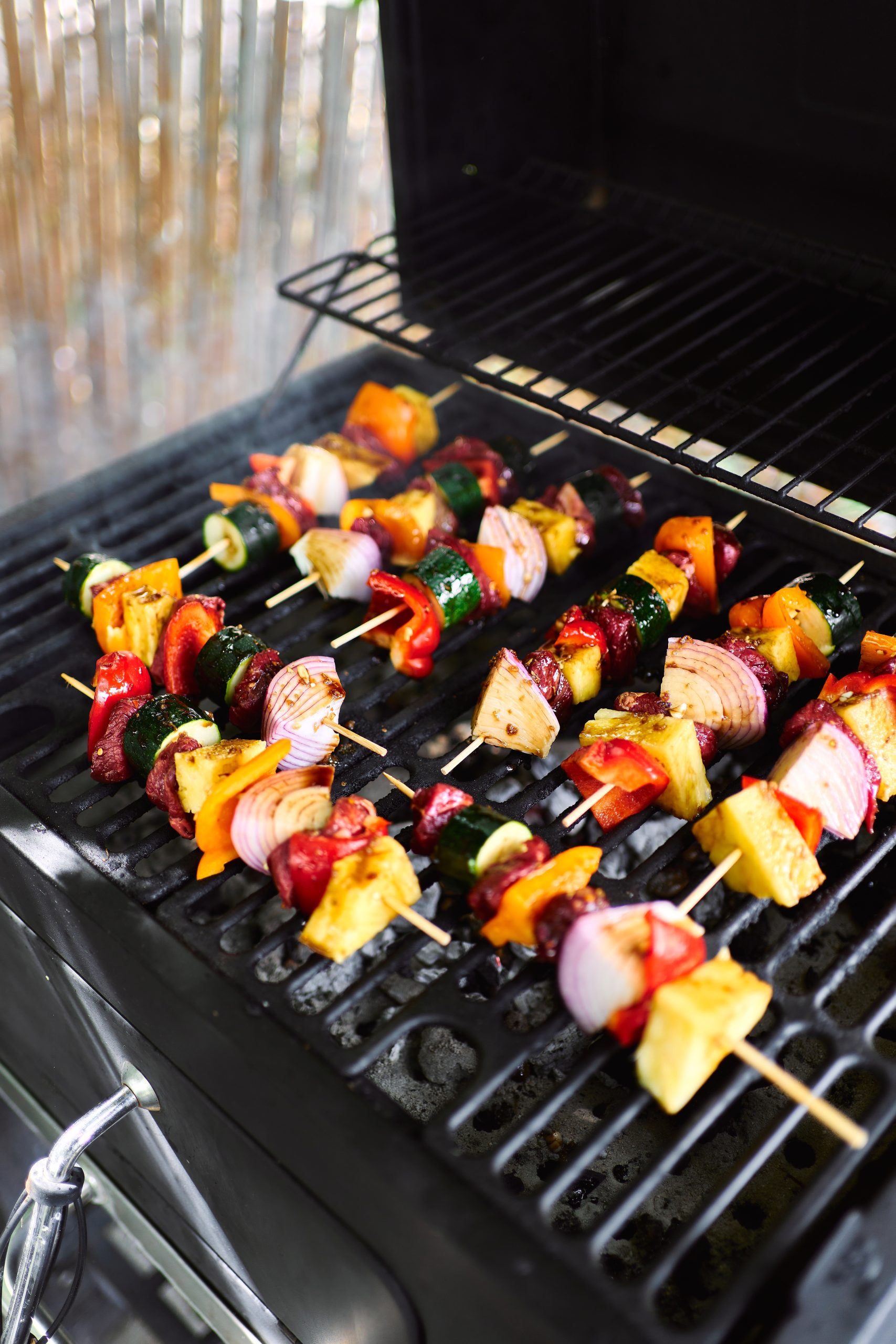
Kabobs are an easy way to enjoy beef and vegetables together and are best when cooked on the grill! Making them is easy if you follow these three tips:
- Marinate meat. Marinade will give your beef a bolder flavor and also adds moisture while grilling.
- Soak wooden skewers. When using wooden skewers, soak them in water to prevent them from burning on the grills.
- Double skewer your kabobs. Using two skewers per kabob adds much-needed support. No one wants to lose their beef!
Meat Grilling Temperatures
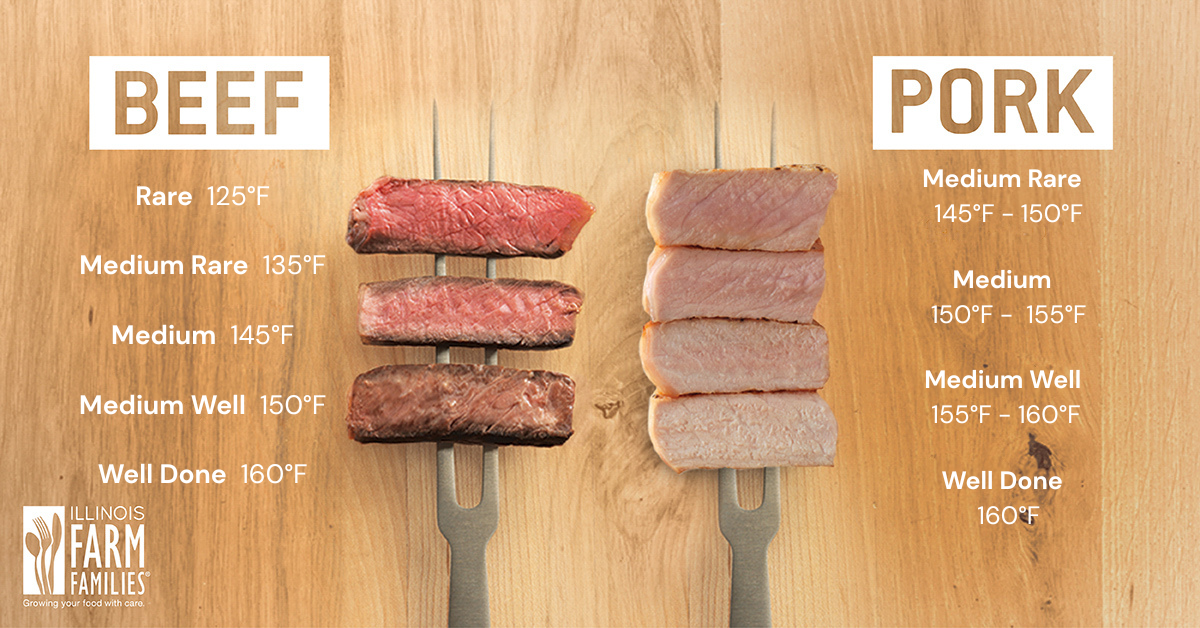
When it comes to grilling, it’s better to go with temperature versus time. Cut thickness and heat settings on grills can vary, so follow this handy temperature guide for getting that grilled-to-perfection beef and pork.
Beef Grilling Temperatures
- Rare: 125 degrees Fahrenheit, cool red center
- Medium Rare: 135 degrees Fahrenheit, warm red center
- Medium: 145 degrees Fahrenheit, warm pink center
- Medium Well: 150 degrees Fahrenheit, slightly pink center
- Well Done: 160 degrees Fahrenheit, little to no pink
Pork Grilling Temperatures
- Medium Rare: 145 to 150 degrees Fahrenheit
- Medium: 150 to 155 degrees Fahrenheit
- Medium Well: 155 to 160 degrees Fahrenheit
- Well Done: 160 degrees Fahrenheit
Whether you’re grilling up pork or beef this summer, remember this: your food starts with farmers who take great pride and care in raising high-quality, nutritious protein for your plates and theirs.
Looking for more grilling inspiration? Try out one of these hot dog recipes.







0 Comments