Cover Crops: Feeding Cattle For Less
Cover crops are an important part of the livestock operations cycle. Not only do they help protect Illinois’ fertile soil in the farming off-season, but they can also be used as an economical feed source for our livestock.
Our cows love the tasty meal and the system is environmentally conscious since the manure produced after digesting cover crops can be used as a fertilizer in our fields to improve the soil for the next year’s crop. It’s a beneficial cycle that livestock farmers have been utilizing for generations.
What are cover crops?
Farmers can use crops such as rye, radishes and legumes to cover fields in the fall like a protective blanket, leaving the cover crops to grow until planting the primary cash crop(s) the following spring. Cover crops can improve soil health by protecting soil from wind and water erosion and adding valuable nutrients for the crops that will grow there next year.
How we use cover crops
Most livestock farmers in our area grow either rye or triticale (a hybrid of rye and wheat) as a cover crop. We grow triticale for its high yields and versatility.

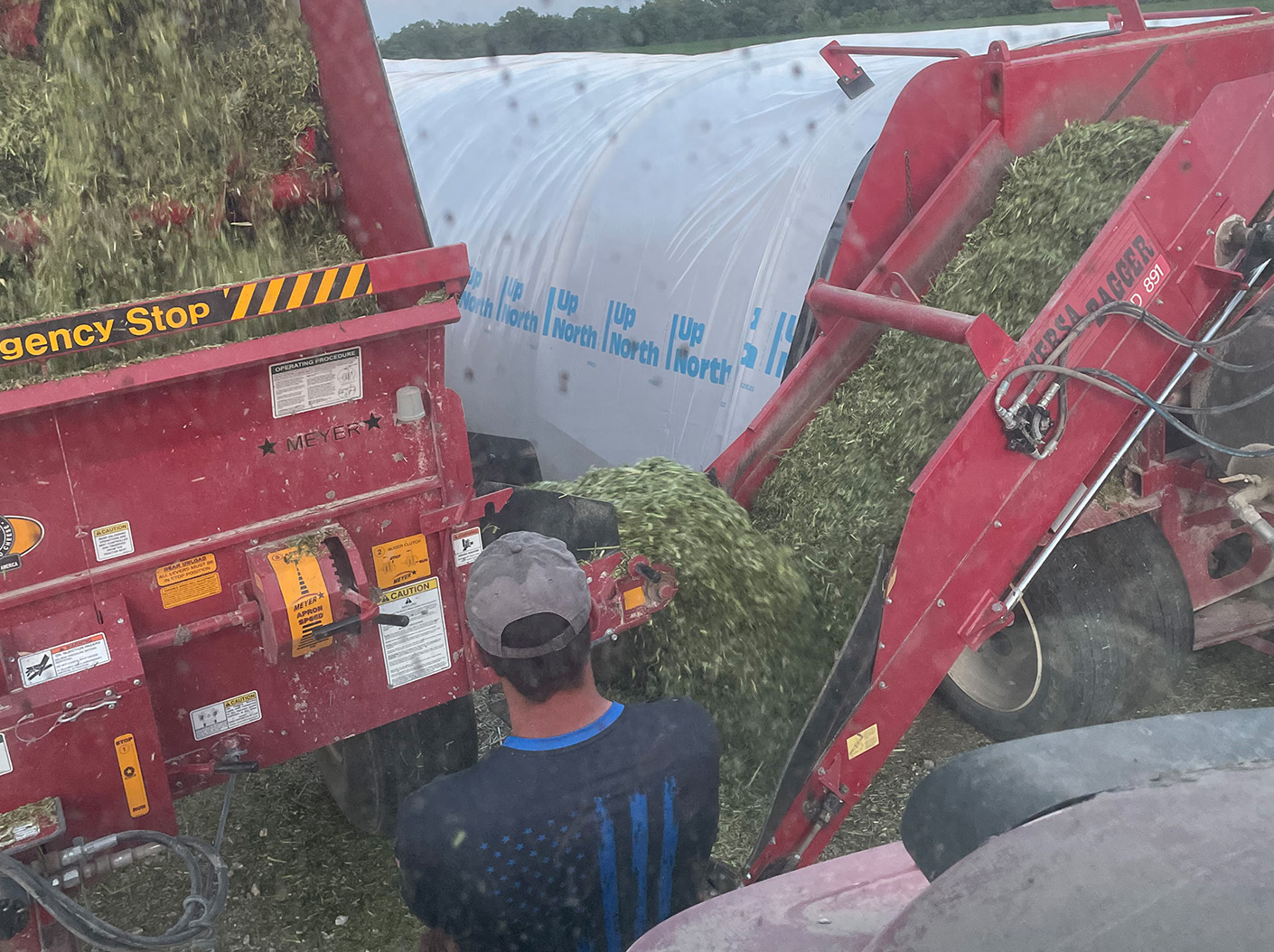
Our farm starts by planting the triticale in the fall after we have baled cornstalks for bedding and added manure to the field. This gives our triticale a fertile bed to start the growing process and gives a cover to our barren soil. Over the winter, we add fertilizer to ensure our triticale can achieve its maximum potential. Come springtime, we mow the crop with our hay mower, then use a forage harvester to chop it, and then wrap it so it can be fermented. The fermenting process helps make the feed easier for the cattle to digest.
This year, we had an outstanding crop. We were able to chop and bale about 1,000 bales off our acres. We were able to wrap some of the crop in plastic to preserve the moisture, and the rest we let dry completely. This gives us the chance to feed wet and dry feed to our animals and find the right balance to ensure our cattle have the most nutritious diet possible.
Cover crops make us become better environmental stewards while increasing profitability. It’s a win-win and definitely something we’ll continue to utilize on our farm for many years to come.
Learn more about how Illinois farmers help the environment and restore our earth with cover crops and other conservation techniques.







0 Comments