A Closer Look at Raising Pigs in Illinois
For generations, pig farmers have been dedicated to raising healthy pigs for high-quality pork products. Today, pig farmers continue to take great pride in their work to feed your family, and theirs. But how does the pork chop hit your plate?
Thanks to advances in technology and scientific research, Illinois pig farmers are able to raise pigs more efficiently and with fewer resources – benefiting Illinois communities and the environment. Here’s how:
A proactive approach to health management
Farmers use many approaches to prevent, control, and mitigate the risk of illness and disease. With the advanced technology on farms, they can identify and treat individual sick animals more effectively.
Farms have also implemented biosecurity measures to help prevent illnesses from spreading to the farm and affecting pigs. Biosecurity practices used today can include:
-
- The Danish bench system: a bench separates a “dirty” and “clean” side of an entrance to the barn, and disinfection and new clothing are provided between sides.
- Shower-in, shower-out: farmers shower before entering the barn and again before exiting the barn.
- All-in-all-out approach to raising pigs: pigs are moved with the same group at the same time their entire life.
- Deep cleaning transports: transport trailers and semi-trucks are deep cleaned and disinfected between hauling pigs.
Watch the reel above to learn more about a few of these practices from Illinois farmer Nate Weaver.
The goal for farmers is to prevent illness before it happens, which helps pig farmers raise healthier pigs!
How pigs are housed
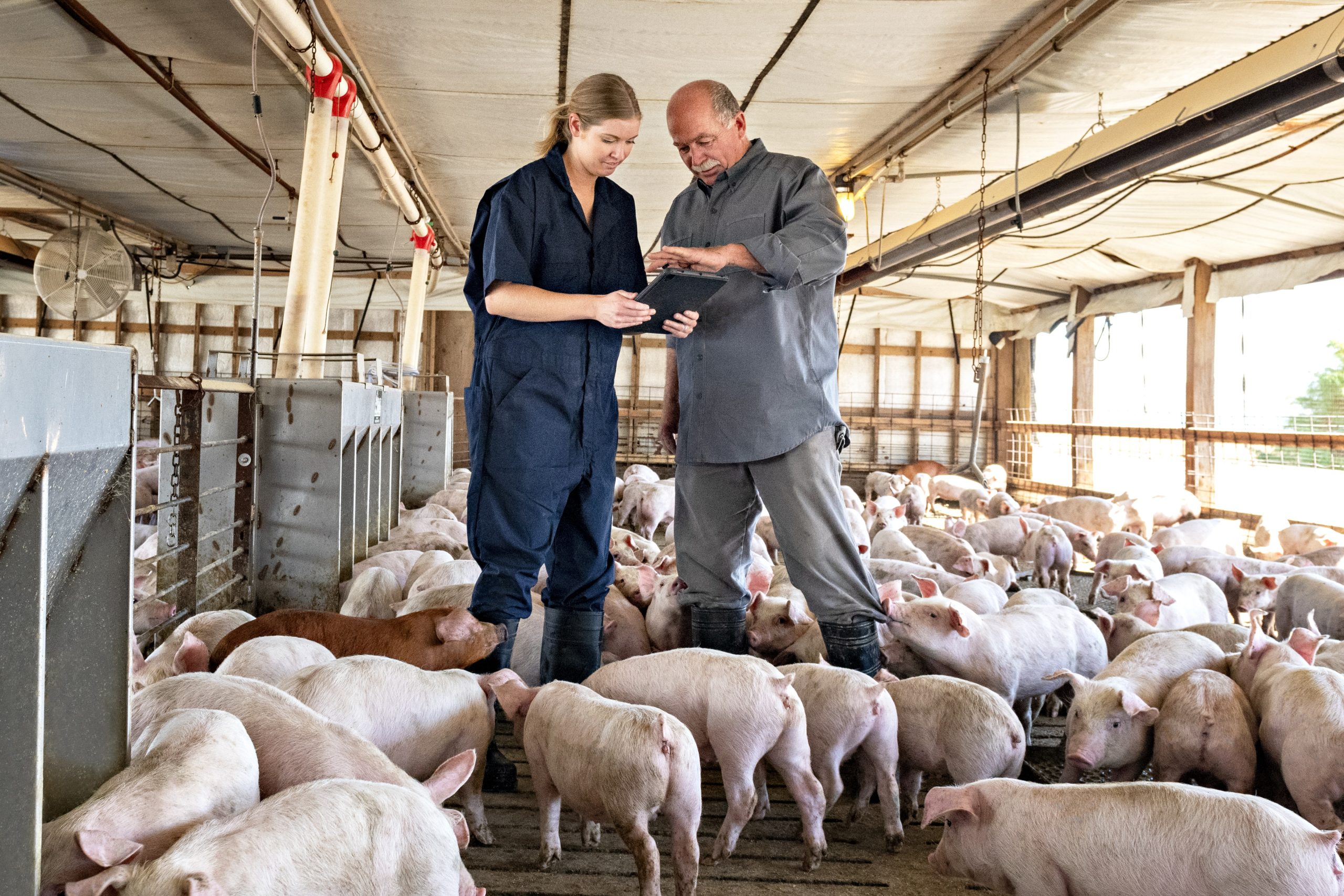
Most pigs are raised indoors in specialized barns designed to provide a safe, clean, and comfortable environment year-round. Indoor housing helps protect pigs from extreme weather, injury, illness, and predators while allowing farmers to closely monitor their health and well-being.
Pigs have very few functional sweat glands, which makes it difficult for them to regulate their body temperature on their own. Farmers use a variety of barn technologies and management practices to help pigs stay comfortable in changing temperatures.
During warmer weather, fans and cooling systems help move air through the barn and keep pigs cool. When temperatures drop, farmers can close barn curtains to reduce drafts and use heat lamps, heated mats, and propane heaters to provide additional warmth.
Check out the reel above to take a tour of Illinois farmer Chad Bell’s pig barn.
A Pig’s Journey Through the Barn
From the time a pig is born until it reaches market weight, it moves through several stages of life. Each stage has different needs, so farmers use specialized barns designed to provide the care, nutrition, and environment pigs need as they grow.
The journey begins in the gestation barn, where pregnant female pigs, called sows, are cared for throughout their pregnancy. When it is time for a sow to give birth, she moves to a farrowing barn. This is where piglets are born and receive close attention during their first weeks of life. Farmers and barn staff are specially trained to care for both the sow and her newborn piglets, making sure they are healthy, warm, and receiving the nutrition they need.
At about 3 weeks old, piglets are weaned from their mother and move to a nursery barn. This is an important transition as piglets move from drinking their mother’s milk to eating a dry diet. Farmers provide a warm, comfortable environment and monitor the young pigs every day to make sure they are healthy and continuing to grow.
Piglets typically remain in the nursery until they are about 42 to 56 days old. From there, they move to a finisher barn, where they spend the final stage of their growth.
In the finisher barn, pigs continue to grow and receive a carefully balanced diet and fresh water each day. Depending on their age and size, pigs can eat 6 to 10 pounds of feed per day. They typically reach market weight at around six months of age and approximately 280 pounds.
Not every farm uses separate barns for the nursery and finishing stages. Some farmers keep pigs in the same barn from the time they are weaned until they reach market weight. This type of production is called wean-to-finish.
While the barns and management practices may vary from farm to farm, the goal throughout each stage remains the same: providing pigs with the care, nutrition, and environment they need to stay healthy and grow.
Specialized Care Teams at Every Stage
Throughout every phase of their lifecycle, farmers and care teams monitor pigs daily. Each team specializes in its specific farm and duty. For example, some team members help sows farrow, while others care only for nursery pigs. This specialization helps farmers better care for their pigs.
The importance of Pig Nutrition
Pig farmers often work with nutritionists who formulate carefully managed rations to help pigs meet their nutritional needs every day. These specialized diets vary and change depending on where pigs are in their lifecycle.
Pig diets usually include corn, soybean meal, and other grains with added vitamins and minerals. Farmers use some Illinois-grown corn and soybeans as feed for livestock, such as pigs.
Take a look at how Nate Weaver transitions his nursery pigs from milk to solid feed in the reel above.
Odor management
Many farms develop odor management plans that consider factors such as wind direction, terrain, and distance. These factors can influence how odors move around a farm and into surrounding areas. Farmers use a variety of practices to help manage odor, including controlling dust, planting trees and other vegetation as buffers, and carefully managing manure.
Manure management plans help farmers determine how manure will be stored, handled, and applied to fields. Proper manure management can help reduce odors while also allowing farmers to use the nutrients in manure as a valuable fertilizer for crops. Through planning and responsible management practices, farmers work to care for their animals, land, and surrounding communities.
Recycling manure
Farmers use a manure management plan with sophisticated systems to capture, control, and use manure as fertilizer. The barns pigs live in have small slots in the floor that let manure drop into what farmers call a pit. These slots help keep the barn clean while the pit collects the manure. Farmers then move manure from the pit under the barn to another holding structure, such as a concrete pit, lagoon, or basin, depending on the farm’s manure management system.
When the time comes, farmers can test the manure to determine its nutrient content and then spread it over their fields as fertilizer for crops. Spreading manure on fields supplies plants with the nutrients they need.
Some farmers, like Chad Bell, combine sustainability efforts for a compounded positive impact. Check out the reel above to see how he is using cover crops and pig manure to improve soil structure and support biodiversity in his crop fields.
Pig farming continues to modernize and evolve to improve animal welfare, environmental health, and pork products. Learn more about how pig farmers care for pigs, people, and the planet.




0 Comments